


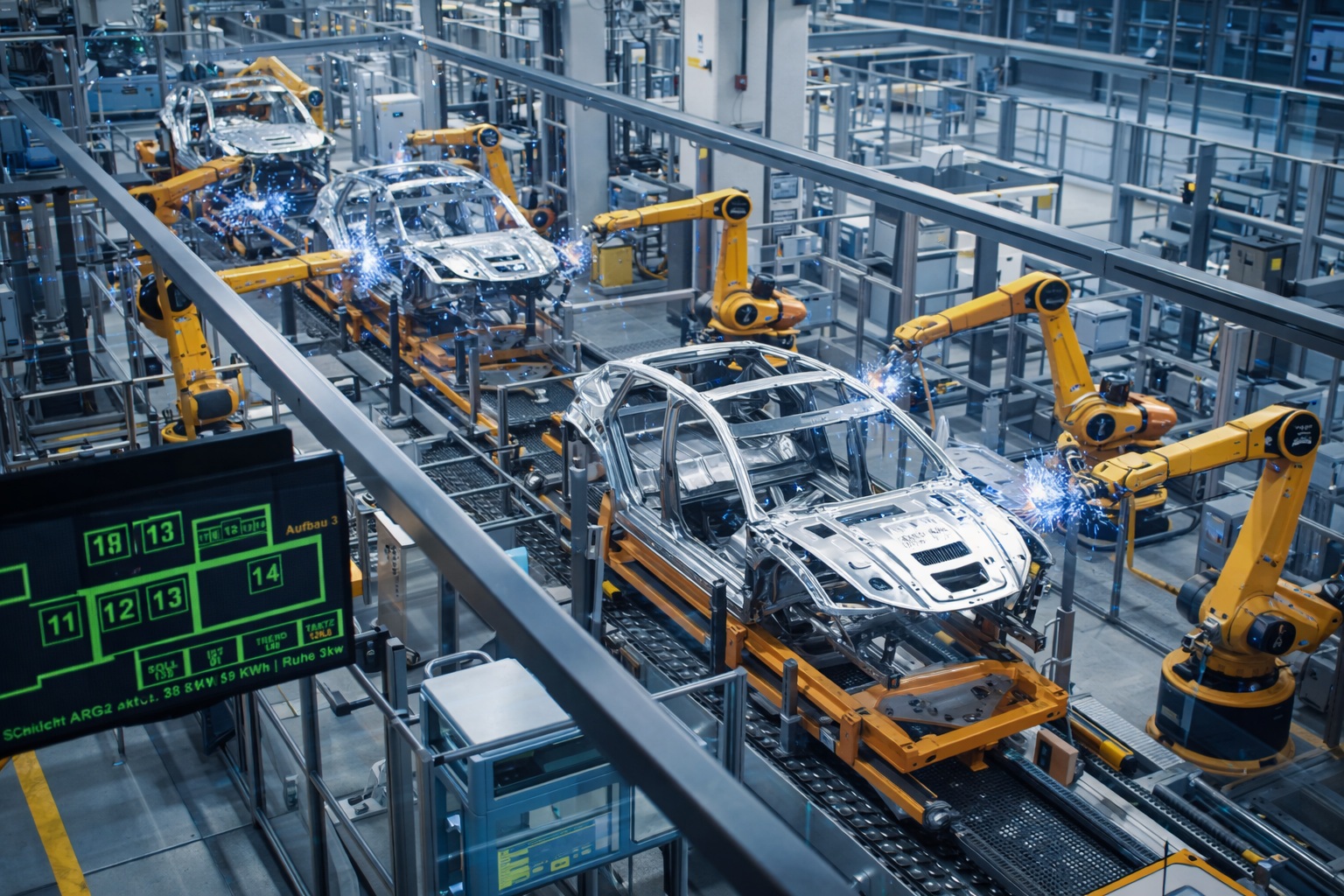
- In 2026, artificial intelligence has ceased to be a pilot project and has become a tool integrated into the production processes of the automotive components sector, improving precision, traceability and operational efficiency.
- Some Spanish companies in the components sector integrated into the Autoparts From Spain platform, such as Gestamp, Antolin, Fersa, RTS and Olipes are strengthening their international positioning through advanced automation, technological innovation and the digitalisation of processes.
Industrial digitalisation occupies a central place in the strategy of automotive component manufacturers.
Solutions based on data analysis, advanced automation and intelligent systems are increasingly applied in production environments to improve process stability, reduce variability and optimise operational performance.
The electrification of platforms, the greater technical complexity of vehicles and cost pressures require more controlled and traceable processes. The capture and exploitation of production data make it possible to anticipate deviations, adjust parameters in real time and maintain consistency in components subject to increasingly strict tolerances, especially in areas such as metal structures, interior systems or transmission elements.
“Digitalisation is not only a technological trend, but an industrial necessity,” explains Mª Begoña Llamazares, markets manager at SERNAUTO and spokesperson for Autoparts From Spain. “Component manufacturers work with very demanding international standards. The integration of data-based tools and advanced automation helps guarantee quality, production stability and regulatory compliance in increasingly competitive markets.”
In the plant, the application of digital technologies is mainly oriented towards process control. Industrial monitoring systems analyse critical variables such as cycle times, thermal conditions, machining parameters or dimensional tolerances, facilitating the early detection of anomalies. This approach helps reduce rejection and rework rates, as well as optimise the use of energy and raw materials.
Industrial automation is integrated into repetitive or high-precision operations, while maintaining flexibility in production lines that must adapt to different platforms and volumes. Structured data analysis enables more precise maintenance planning and improves equipment availability in international manufacturing programmes.
“The evolution towards more digitalised production environments also improves the ability to respond to changes in demand or technical requirements,” adds Llamazares. “The availability of structured information and real-time traceability makes it possible to make decisions more quickly and reduce uncertainty in planning.”
In this context, Autoparts From Spain,the platform of Spanish automotive suppliers leading the manufacture and export of components produced in Spain, observes how digitalisation forms part of the sector’s industrial evolution. The progressive incorporation of advanced technologies responds to operational criteria linked to quality, efficiency and technical control.
Among the companies integrated into the platform is, Gestamp, a global supplier of highly engineered metal components for body-in-white, chassis and mechanisms, whose main objective is to achieve safer and more sustainable mobility. In recent years, the multinational company has developed a digitalisation process for its operations with a focus on efficiency and competitiveness.
Antolin, specialised in interior systems, integrates advanced technology and electronics into roof modules, doors and panels. The evolution of vehicle interiors towards more connected and functional solutions involves development and industrialisation processes supported by digital tools capable of managing greater technical complexity and shorter innovation cycles.
Fersa, manufacturer of advanced bearing solutions, for its part maintains a strategy focused on technological innovation and production optimisation in order to meet requirements for precision, performance and energy efficiency in mobility applications. Continuous process improvement is key in components subject to demanding operating conditions.
Likewise, other companies within the ecosystem of Spanish automotive suppliers are incorporating digital tools to optimise their production processes and strengthen the reliability of their components. Companies such as RTS, a manufacturer specialised in steering and suspension components for passenger cars and commercial vehicles, combine engineering expertise with full control of manufacturing processes — from forging and machining to assembly — in their own facilities. The company introduces more than 500 new developments each year through reverse engineering processes and detailed feasibility studies, supported by technological improvements and monitoring systems that optimise production flows and accelerate the introduction of new products to the market.
The manufacture of lubricating oils and greases is also evolving towards more digitalised and efficient models. The Spanish company Olipes, based in Campo Real (Madrid), develops more than 2,500 product references that it markets in 48 countries and in recent years has driven a transformation process aimed at strengthening its international growth. This strategy includes the digitalisation of business management through the implementation of SAP adapted to its activity, as well as the expansion and sectorisation of its facilities to improve the efficiency and agility of production processes.
Industrial digitalisation also has an impact on asset management and maintenance planning. The analysis of operational data makes it possible to anticipate technical intervention needs and reduce unplanned interruptions. In a globalised manufacturing environment, where production schedules are closely coordinated, operational availability is a determining factor.
Likewise, digital traceability facilitates compliance with regulatory requirements and technical audits demanded by European and international manufacturers. The ability to document processes, parameters and controls in a structured format provides greater transparency and strengthens trust in the supply chain.
“The Spanish components sector maintains a strong export orientation and participates in international programmes for multiple vehicle manufacturers,” emphasises Llamazares. “Investment in digitalisation and advanced technological capabilities is part of a strategy to consolidate this position in an industrial environment that is evolving rapidly.”