


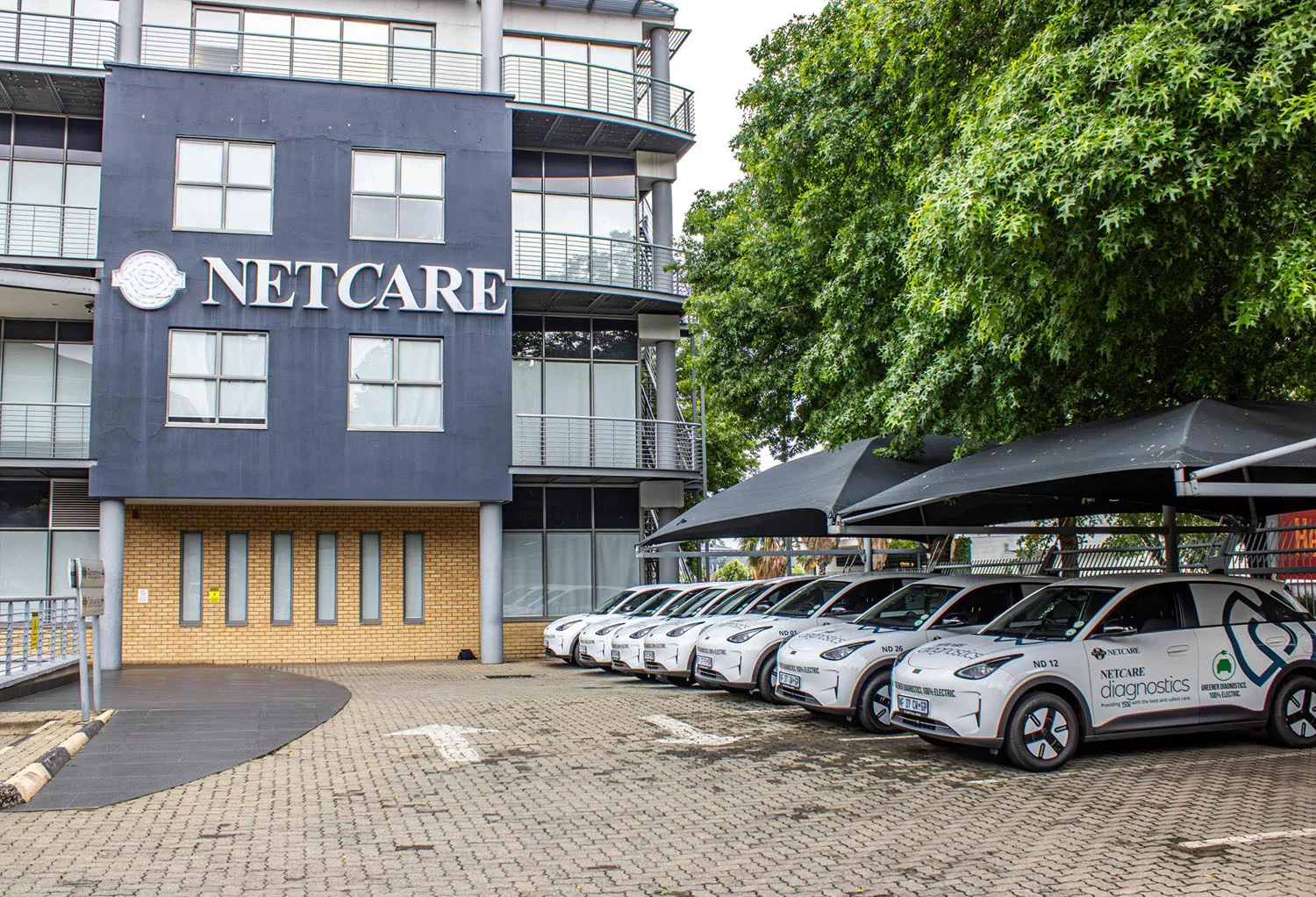
Geely E2 Aspire for shorter urban specimen collection routes
Netcare Diagnostics is introducing its first fully electric vehicles to its transport fleet, starting with shorter urban routes for collecting patient pathology specimens.
Geely Auto South Africa handed over the Geely E2 Aspire vehicles, purchased by Netcare Diagnostics, at Netcare’s head office in Sandton today. Dr Richard Friedland, chief executive officer of the Netcare Group, and Marc van Heerden, managing director of Netcare Diagnostics, received the vehicles, which will operate in Gauteng, KwaZulu-Natal and the Western Cape.
“We are proud that Netcare Diagnostics has selected the Geely E2 for this important work,” said Greg Maruszewski, chief operating officer of Geely Auto South Africa.
“This initiative demonstrates the practical role electric mobility can play in organisations that serve people every day. The Geely E2 combines efficiency, practicality and technology, making it well suited to everyday operational requirements, and we look forward to supporting Netcare Diagnostics as it takes this step towards more sustainable mobility.”
The E2 Aspire was selected with pathology transport needs in mind, including the distances travelled on collection routes and opportunities to recharge between journeys. Netcare Diagnostics has installed dedicated charging units at the hospitals and pathology laboratories where the vehicles will operate from, allowing vehicles to recharge while awaiting specimens.
Van Heerden adds that this is another way in which the Netcare Group is working to build sustainability into its daily operations.
“Our Group CEO, Dr Richard Friedland, had the vision to make environmental sustainability an integral part of Netcare’s business strategy. His leadership has encouraged us to look at the practical decisions we make every day and ask where we can reduce our environmental impact,” he says.
“In pathology, our first responsibility is to ensure specimens reach our laboratories reliably and on time. We identified the Geely E2 Aspire as the most appropriate electric vehicle for these shorter routes at this stage. This initial deployment will enable us to assess how it performs in daily use and where electric vehicles may be suitable elsewhere in our fleet.”
Netcare introduced its environmental sustainability programme in 2013, and its work has since received local and international recognition. That commitment also extends to initiatives such as My Walk Made with Soul, which turns PVC safely collected from Netcare hospitals into school shoes for children. The introduction of electric vehicles brings the same practical attention to environmental impact into pathology transport.