


Many South Africans considering an EV stress about charging times. They still see them as a disruption rather than a quick stop at a filling station. But that is changing.
In August, Zero Carbon Charge announced it would double the charging capacity at its two hubs on the N3, taking each from 360kW to as much as 720kW. The hubs had been open for three months. The upgrade was brought forward because more drivers were using them than the company had planned for.
For several years the conversation about electric vehicles in South Africa has circled the same worry, whether the infrastructure would arrive. It is arriving and in places it is being outpaced. Which makes the practical question what you do with the half hour?
A typical stop on a fast public charger runs to roughly half an hour, depending on the car. That is a grocery shop. A coffee with someone you have been meaning to see. A school pickup, or the emails you were going to answer in the queue anyway. On the N3 hubs it is a farm stall, a restroom and free WiFi, which is a kinder stop than most forecourts manage.
"When you think about it, half an hour is not a long time. On a long journey, it passes while you’re still in the queue buying chips and waiting for everyone to come back from their bathroom break," says Grant Locke, Managing Director of Volvo Car South Africa. "On shorter ones, you can still take up that time running to the ATM and making a quick call. The point being that charging your vehicle is no longer an inconvenience, it’s a quick pit stop while you go on with your day."
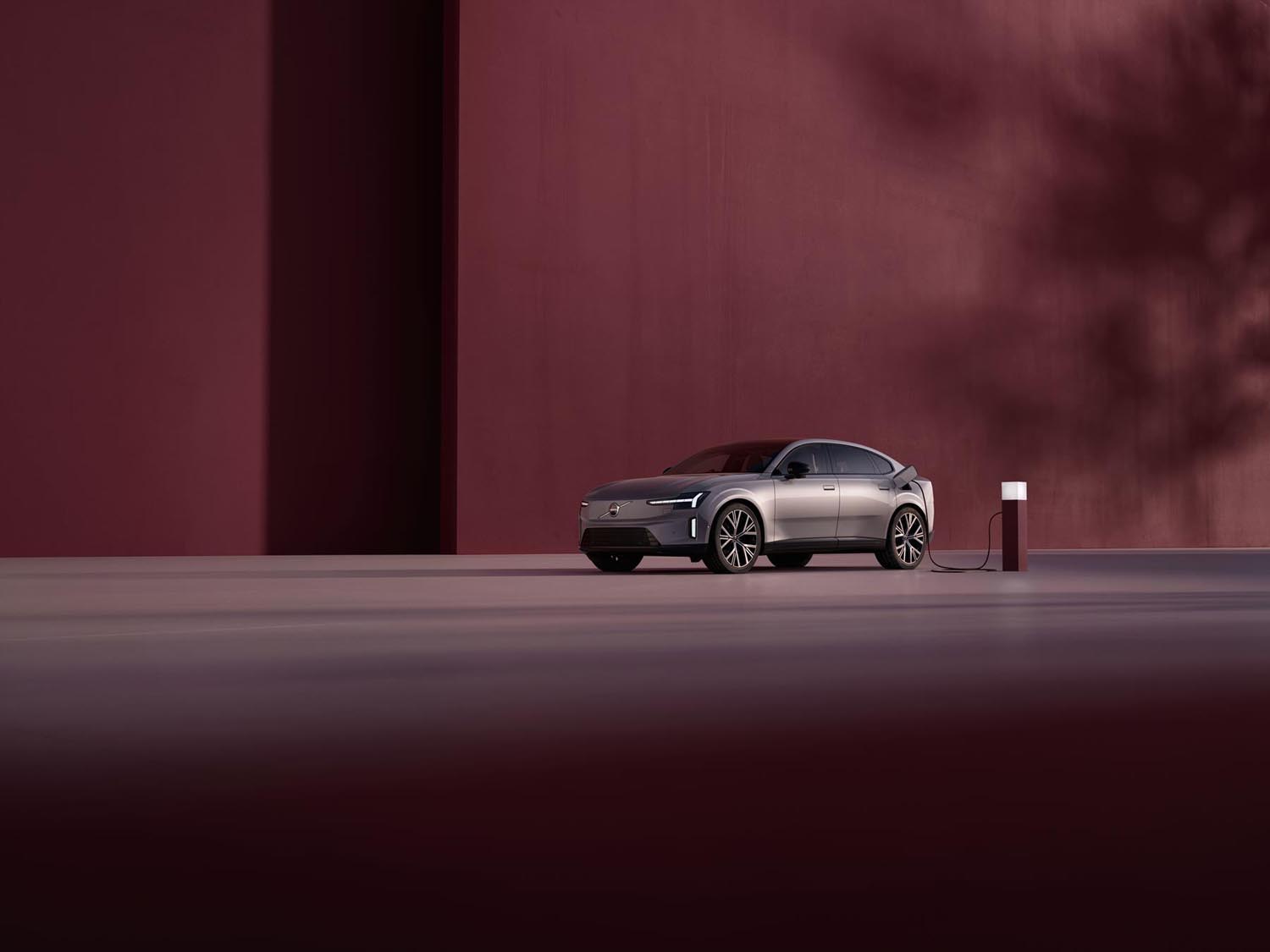
The exact amount of time it takes depends on what you drive and what you plug into. For example, Volvo's ES90, built on an 800-volt system, is quoted at 10 to 80% in around 22 minutes, though that assumes a 350kW charger. The EX30 takes closer to 26 minutes on a 175kW unit. On the 75kW chargers common in a lot of shopping malls, most cars will want half an hour or more.
For several years the conversation about electric vehicles in South Africa has circled the same worry, whether the infrastructure would arrive. It is arriving and in places it is being outpaced. In South Africa, more charging stations are showing up in where people already spend time, shopping centres, office parks, restaurants. In Johannesburg, Cape Town and Durban, a driver can generally find one within about 20 kilometres.
Public charging is also the smaller half of the story. Most charging happens at home, overnight, at the lowest tariff drivers will ever pay for it. The public network is for topping up while motorists are already out, which is why where it sits matters more than how fast it runs.
While none of this makes electric ownership frictionless, it does make it much easier, especially in a world where petrol prices are rising. Charger availability still varies, and long trips need more planning than a tank of petrol does. But the framing that treats every charge as thirty minutes lost assumes those minutes were otherwise free. For most people they were not. They were already spoken for, the errand, the coffee, the pickup. The infrastructure is catching up faster than the perception is.