


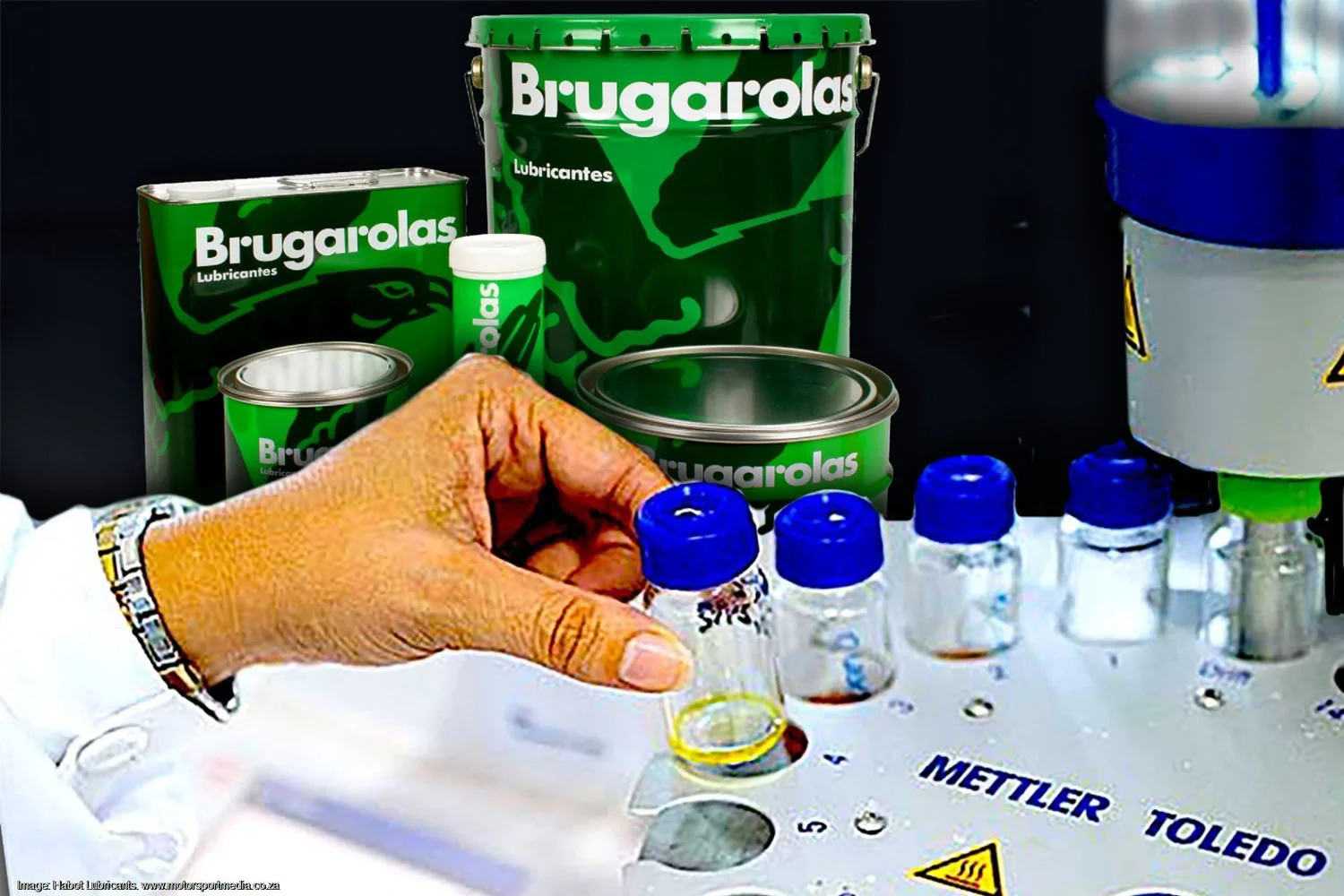
How Habot’s calcium sulphonates revolutionise grease
Grease is a slippery game. Basically an oil suspended in a thickener and reinforced with additives, one can think of it as an oil-soaked sponge. Like the sponge, a thickener holds the oil in place, the oil does the lubricating and the additives protect it from any peril. The trouble is that there are so many different greases out there for so many different applications, that it’s a literal minefield to choose the right grease.
Which is why Habot Performance Lubricants’ Brugarolas has come up with something completely different in its new calcium sulphonate grease. Neither Spain’s world grease leader nor South Africa’s foremost synthetic lubricants manufacturer Habot need any introduction. But to better understand calcium sulphonate greases, one needs to first look at what grease really is.
First off, there are seven different types of grease. From semi-fluid smears used in open gear cases to very soft and soft greases on to the most common medium greases, that’s already quite a bit to get your mind around. But wait, there are more greases too! From firm to very firm, through heavy duty and on to hard and very hard applications.
Greases bind differently. By metallic soap or non-soap; lithium and lithium complex and calcium thickeners, depending on the application. Add aluminium complex, polyurea, clay and bentonite greases, each with its own weaknesses and strengths. And then the thickener determines its heat, and its base oil sets a grease’s cold limits.
Grease base oils also range from regular mineral to complex synthetic lubricants. Once again, each has its pros and cons. Never mind the balance between load and speed. Greases also use different additives, from anti-wear to rust and corrosion inhibitors, metal deactivators, and antioxidants to tackifiers, polymers and water-resisters.
So choosing the right grease is a balancing act between its operating temperature and its bearing’s speed and load, its resistance to water, its application and compatibility with an existing grease. Confused yet? Then we get to greasing pitfalls. From under, or over greasing to picking the wrong viscosity or grade and mixing incompatible greases.
So it’s important to keep grease containers closed, clean, clearly labelled and stored cool, out of the sun and away from moisture between use. Also adhere to a grease’s shelf life, work clean and use a dedicated gun per grease type to prevent failure. And just in case, grease’s colour also has no bearing on its application, either.
All of which led Brugarolas to find a simpler way to, well, grease the world. From its first patent back in 1960, the Spanish grease maker’s scientists hatched a plan, gathered new equipment, researched and performed all the necessary trials, so to say, develop a new greasing elixir.
Their experiments led to developing a new calcita and calcium sulfonate molecular structure bound as a miscella dispersed in oil. Habot’s Brugarolas calcium sulphonate grease is revolutionary in how it compromises between its many conflicting needs.
Capable of carrying heaviest loads while offering highest levels of mechanical work stability over an extremely wide minus 30 to 180ºC working temperature range, it is also highly water resistant with very low oil separation. Add great sealing capacity, a high pour point, pumpability, excellent radiation resistance and antioxidant capacity.
It is also fully compatible with otherwise difficult to mix lithium and complex lithium greases. Most significantly, they not only showed better performance in every property tested, but Brugarolas calcium sulphonates reduce grease consumption to deliver far greater re-greasing periods.
Best of all, there’s no limit to Brugarolas calcium sulphonate grease application. Whether it be in the auto and aero, shipping or energy industries, to the worlds of food, chemicals, paper, and steel, and so much more, there’s a Brugarolas calcium sulphonate compound ready to grease whatever is needed, better than ever before.
Learn more at www.habot.co.za now!